
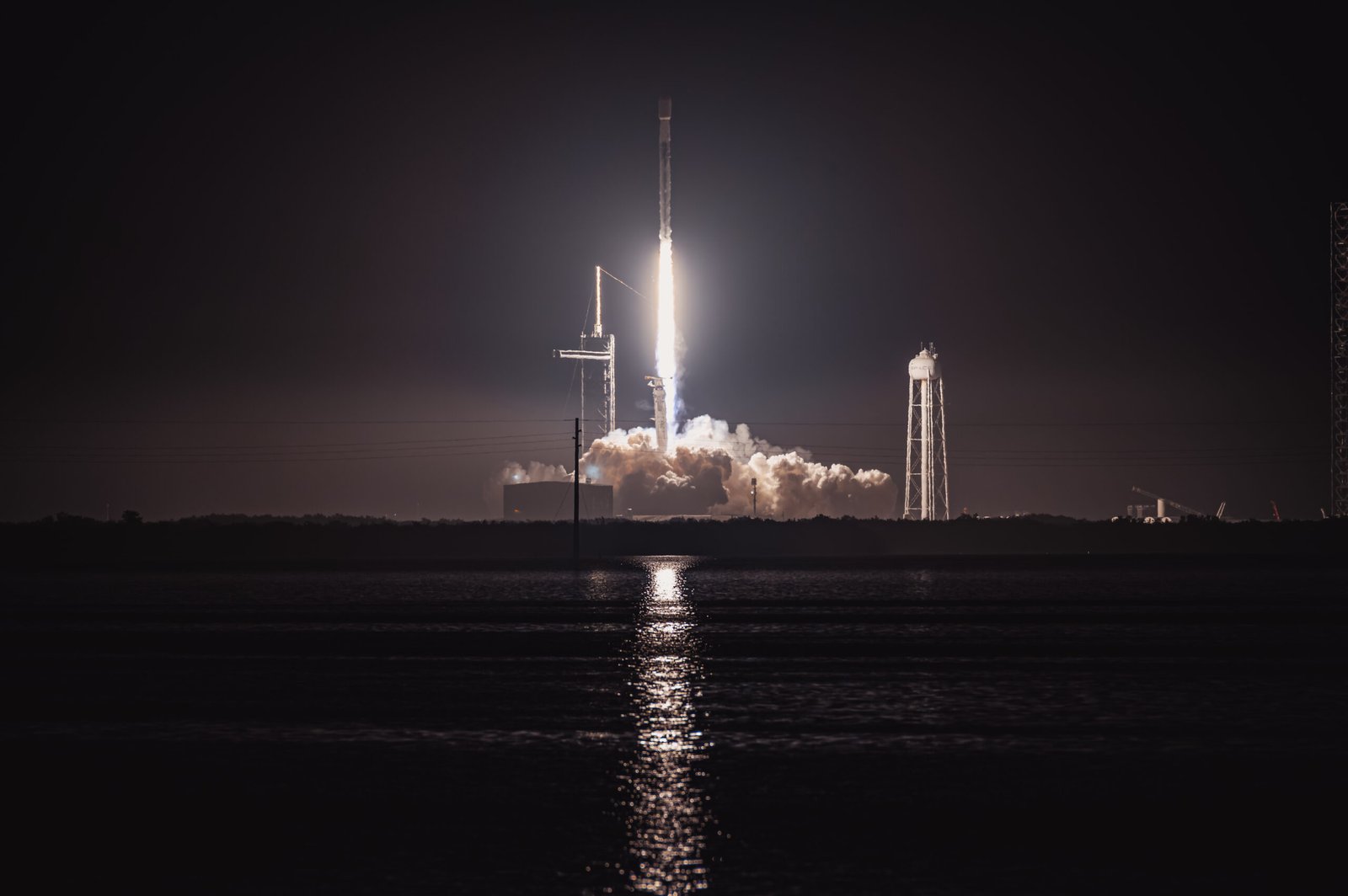
The United States has given SpaceX permission to build the largest satellite constellation ever proposed: up to one million satellites that would work as data centers in orbit, processing artificial intelligence workloads in space and sending the results back to Earth.
The Federal Communications Commission announced the decision on Wednesday, 25 November 2026, describing it as the first authorization in American history for a constellation of space-based data centers. The network, called Starmind, is designed to meet the rapidly growing demand for AI computing — a demand that is already straining power grids, land and water supplies on the ground.
“America is leading the world into the era of super intelligence,” FCC Chairman Brendan Carr said in a statement, adding that the move “opens a bold new frontier.” Elon Musk, the founder of SpaceX, welcomed the decision on social media, calling it “a great asset to America and the world.”
The approval is a major regulatory win for Musk’s company. Whether the constellation can actually be built — a million satellites, launched and operated over fourteen years — is another question entirely, and scientists who study the night sky and orbital debris say the plan raises serious concerns.
What happened
SpaceX applied to the FCC on 30 January 2026 for permission to deploy up to one million “orbital compute modules” — satellites carrying computer chips, linked together to form data centers in low Earth orbit. The regulator opened the proposal to public comment on 4 February, and the application drew a substantial number of responses, including formal petitions asking the FCC to deny it.
On Wednesday, the FCC granted the authorization, with conditions. The order requires SpaceX to deploy and operate its first Starmind satellite by 25 November 2033, to have 10 per cent of the constellation — 100,000 satellites — in orbit by November 2035, half the constellation by November 2038, and the full million by November 2040.
The FCC said the decision would help support the computing infrastructure needed for America’s continued development of artificial intelligence, and that the Starmind system would operate consistently with its orbital debris rules. It said it was continuing to review other proposals for orbital data centers and intended to issue decisions on them through its normal regulatory procedures.
What is Starmind?
Starmind is not an extension of Starlink, SpaceX’s broadband internet network. Starlink connects people on Earth to the internet; Starmind would provide computing power. Its satellites would process large amounts of information in orbit — running AI models, crunching data — and send the results back to Earth.
SpaceX describes the concept as “capturing solar energy in space to power low-cost, high-performance AI compute for Earth.” The satellites would be solar-powered, flying in six orbital shells at altitudes of between 500 and 1,002 kilometres, and communicating with each other through high-bandwidth optical links — laser connections — with radio frequencies as a backup for telemetry, tracking and control, including in emergencies.
The scale is difficult to overstate. SpaceX already operates one of the largest satellite constellations ever assembled, with just over 11,000 Starlink satellites in orbit. A fully deployed Starmind network would increase the total number of satellites in Earth orbit roughly fifty-fold. There are about 17,000 active satellites in orbit today; SpaceX is proposing to add a million.
The race for computing power
The approval comes as the AI industry’s appetite for computing power grows faster than the infrastructure on Earth can supply. Tech companies are building data centers at a historic pace, and the electricity, land and water they consume have become a political issue in the United States and elsewhere. Orbital data centers are being presented as a way around those constraints — unlimited solar power, no land to buy, no neighbours to object.
SpaceX is not alone in pursuing the idea. Google and Blue Origin are among the other companies working on their own orbital data center plans, and the FCC said it expected to rule on competing proposals in due course. Carr framed the decision as part of a national competition. “By moving compute capacity beyond Earth, SpaceX and the many competitors working on their own orbital data centers are meeting the moment,” he said. “This is the kind of American ingenuity that can unite our strengths in space and advanced technology, reinforce our economic leadership, and expand prosperity here at home.”
Musk has said he anticipates the first Starmind spacecraft launching in the third quarter of 2027, with a demonstration of the AI satellite technology by late that year and broader deployment potentially beginning as early as 2028. SpaceX’s chief financial officer, Bret Johnsen, said last week that the company plans to launch its first data centers into space in 2027 and expand its presence through 2029.
The project would depend heavily on Starship, SpaceX’s giant reusable rocket, which is expected to play a central role because of the unprecedented number of satellites involved. Deploying hundreds of thousands of satellites would require a launch cadence and payload capacity far beyond what conventional rockets could economically provide.
The sceptics
The decision has drawn sharp criticism from astronomers, environmental groups and rival satellite operators, who say a constellation of this size would crowd low Earth orbit, threaten the night sky and create risks that are not yet understood.
The American Astronomical Society, satellite communications company Viasat and Amazon-owned Kuiper Systems were among those who called on the regulator to deny the proposal. In a statement on Wednesday, the astronomical society said it was “disheartened and dismayed” by the decision, warning that the constellation’s position in low Earth orbit would undermine decades of federal investment in astronomical facilities and “the ability of astronomers and the public to enjoy and study the night sky.”
“The proposed constellation involves larger (and therefore brighter) and more numerous objects,” the society said, adding that the satellites “would therefore be visible as extremely bright objects for longer periods in the night sky.”
Adam Becker, an astrophysicist and author, called the prospect of launching a million satellites to create data centers in space “a fantasy.” “It’s not going to happen,” he said on Wednesday.
Becker argued that the physics of cooling computers in space is a fundamental obstacle. Space may be cold, but it is also a vacuum, which traps heat inside objects much like a thermos. “There are basic physical limits” to radiating that heat away, he said, and while sending up many smaller satellites could in principle carry the material needed to shed heat, it would be expensive and difficult.
He also warned of the risk of collisions. “You could end up with a cascading set of space junk collisions,” Becker said, noting that such crashes could create “a cloud of debris” in low Earth orbit — the same region where many weather and telecommunication satellites operate.
The Secure World Foundation, a space sustainability organisation, had urged regulators to assess the cumulative risks to orbital sustainability before granting approval. The FCC ultimately declined to undertake a comprehensive environmental assessment, saying several of the concerns raised fell outside its regulatory jurisdiction, while maintaining that the constellation complied with its orbital debris rules.
The FCC did not approve every part of SpaceX’s request. The company had sought a waiver to allow satellites operating above 372 miles (600 kilometres) to be moved into so-called graveyard orbits at the end of their operational lives, rather than being brought down to burn up in the atmosphere. The agency said SpaceX had not provided sufficient information about its proposed disposal process, and deferred that part of the application.
What happens next
The authorization sets a clock running. SpaceX has until November 2033 to put its first Starmind satellite into operation — seven years from now — and until 2040 for the full constellation. Missing a milestone could put the authorization at risk, and the final stretch alone would require launching roughly 685 satellites a day between 2038 and 2040, about one every two minutes.
For now, the approval is a statement of intent as much as a licence: no Starmind satellite has been launched, no orbital data center has been built, and the technology to cool and operate a million computing satellites in space has yet to be demonstrated. The FCC’s decision opens the door; whether SpaceX can walk through it will depend on Starship, on manufacturing at a scale the space industry has never attempted, and on solving engineering problems that sceptics say may have no practical answer.
The decision also fits a broader push in Washington to secure American leadership in advanced technology. The Global Brief reported earlier this week that the United States has proposed new tariffs on 14 trading partners in a fresh push against excess factory capacity — https://theglobalbrief.site/us-proposes-new-tariffs-on-14-trading-partners-in-fresh-push-against-excess-factory-capacity/ — part of the same effort to keep critical industries, from chips to computing, anchored in the United States.
For astronomers, the next step is watching what happens in the sky. For SpaceX, it is building the rockets, the satellites and the factories to make a million of them. The first test comes in 2027, when Musk says the first Starmind spacecraft should fly. Until then, the world’s largest data center exists only on paper — and in an FCC order that calls it a historic first.
More from The Global Brief: read our earlier Technology coverage and our report on the US tariffs proposal — https://theglobalbrief.site/category/technology/
Sources
- Reuters — US authorizes SpaceX to deploy 1 million satellites for data centers in space: https://www.reuters.com/business/media-telecom/us-authorizes-spacex-deploy-1-million-satellites-data-centers-space-2026-11-25/
- Associated Press (via NPR Illinois) — FCC says SpaceX can deploy 1 million satellites for data centers in space. Scientists are skeptical: https://www.nprillinois.org/2026-11-26/fcc-says-spacex-can-deploy-1-million-satellites-for-data-centers-in-space-scientists-are-skeptical
- Gizmodo — FCC Approves SpaceX’s Plan to Deploy 1 Million Satellites to Orbit: https://gizmodo.com/feds-approve-spacexs-ai-data-center-satellites-all-1-million-of-them-2000845526