
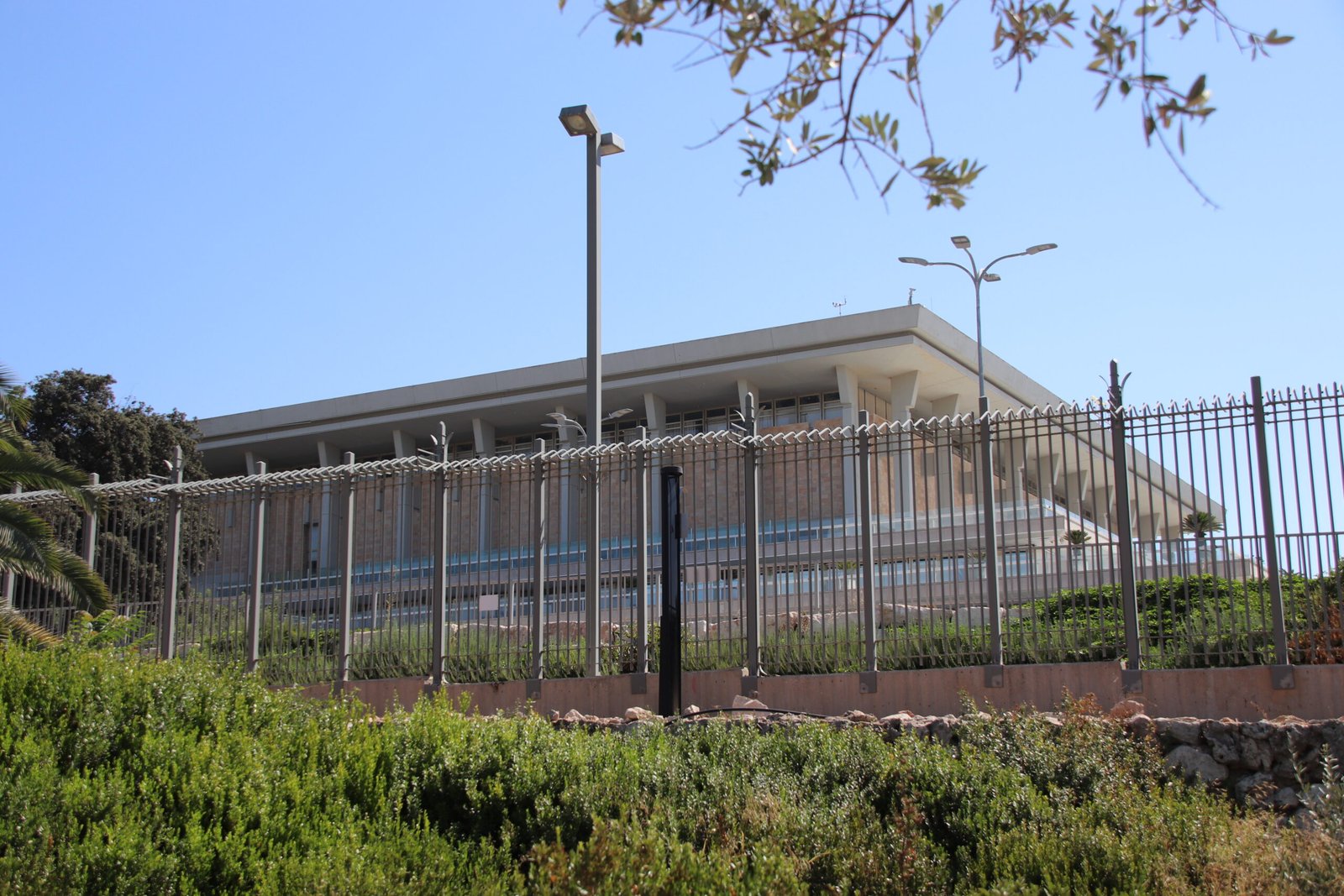
Israel’s parliament took its first formal step on Wednesday towards an independent investigation into the October 7, 2023 Hamas attack, voting to advance a bill establishing a state commission of inquiry despite the opposition of caretaker Prime Minister Benjamin Netanyahu.
The Knesset voted 65 to 50 in a preliminary reading to advance the bill, the first of four readings the legislation must pass before it becomes law. In a separate vote, lawmakers also advanced a bill imposing an eight-year limit on a prime minister’s time in office and barring indicted lawmakers from forming a government, in a session that underscored how far control of the legislature has shifted since last month’s election stripped Netanyahu of his parliamentary majority.
The votes were the most significant legislative moves yet by the opposition-run Knesset, which was sworn in on November 10 after an October 27 election left no party or bloc with a clear path to power. For the families of those killed and taken hostage on October 7, who watched from the public gallery as the results were announced, it was a moment many had waited more than three years to see.
“For the bereaved families, for the survivors of captivity and those who did not return to us alive, we will uncover the truth and take every step to prevent the next disaster,” Gadi Eisenkot, the former military chief tapped to form Israel’s next government, wrote in a social media post after the vote.
What happened
The inquiry bill, introduced by Yashar lawmaker Orit Farkash-Hacohen, would establish a five-member state commission of inquiry to examine the failures surrounding the Hamas-led attack on southern Israel and the war that followed. The commission’s mandate would cover the period from August 26, 2014, when Israel’s military operation in Gaza ended, through January 26, 2026, when the remains of the last hostage were returned.
The bill passed its preliminary reading with 65 lawmakers in favour and 50 against, with no abstentions. Representatives of bereaved families, including members of the October Council group, cheered from the gallery as the result was announced. The bill was signed by the chairs of all parliamentary factions in the opposition, and two Arab lawmakers, Walid al-Huashla and Ahmad Tibi, also put their names to it — a notable step, since one of the conditions set by Eisenkot for forming a government had been support for defining Hamas as a terrorist organisation in the legislation.
In a second vote, the Knesset advanced the term-limits bill by 65 votes to 48. Sponsored by Yisrael Beiteinu lawmaker Oded Forer, the legislation would cap a prime minister’s tenure at eight consecutive years, bar lawmakers under criminal indictment from forming a government, and establish a mechanism for removing a sitting prime minister facing such charges.
Lawmakers also advanced a bill to repeal a law that placed the police misconduct investigations department under the authority of the justice minister, and a special committee cleared for a first reading a bill to repeal the broadcasting law promoted by Communications Minister Shlomo Karhi. Taken together, the votes amounted to a systematic effort by the new parliamentary majority to unwind legislation associated with Netanyahu’s government.
What officials said
Netanyahu has long opposed an independent state commission of inquiry, and there was no immediate comment from him or his office after Wednesday’s votes. Instead, he has demanded a government-empowered inquiry in which members of parliament would choose the panel’s members and the cabinet would set its mandate — a proposal his critics, including Eisenkot, describe as an attempt to control the investigation and cover up the truth.
His allies were blunt about their view of the bill. Transport Minister Miri Regev, a close Netanyahu ally, said the legislation “will not lead to an examination of the failures that took place,” but would instead “investigate our brave, heroic soldiers.”
Supporters of the inquiry argue the opposite: that only a fully independent commission, appointed through the established state process, can credibly examine the intelligence and military failures that allowed Hamas gunmen to breach Israel’s defences on October 7, 2023. Surveys have shown wide public support for such a commission into what is widely regarded as the country’s biggest security failure in decades.
Hamas-led militants killed about 1,200 people and took more than 250 hostages in the attack on southern Israel. The assault set off Israel’s military campaign in Gaza, which has killed more than 74,000 Palestinians and internally displaced nearly the entire population of about two million people, according to figures reported by Reuters.
The political backdrop
The votes took place against the most unsettled political landscape Israel has seen in years. Netanyahu’s coalition of far-right and ultra-Orthodox parties lost its parliamentary majority in the October 27 election, falling to 53 seats in the 120-seat Knesset, although his Likud party remains the largest single party. Eisenkot’s bloc of Jewish-led right-wing, left-wing and centrist parties won 48 seats, while Arab-led parties won a record 19 seats.
President Isaac Herzog has tasked Eisenkot with forming a government, while Netanyahu remains in office in a caretaker capacity. Eisenkot has until December 6 to assemble a coalition, with the possibility of a 14-day extension.
On Tuesday, Eisenkot’s Yashar party reached its first coalition agreement, signing a pact with Avigdor Lieberman’s Yisrael Beiteinu party, which won seven seats. Lieberman said on Wednesday that a government including the ultra-Orthodox United Torah Judaism party and backed by what he called a “clear Jewish majority” could be presented by the end of next week, while rejecting coalition talks with Netanyahu’s Likud.
The arithmetic remains difficult. Eisenkot’s bloc holds only 48 seats, well short of the 61 needed for a majority, and most of its constituent parties have so far refused to form a coalition that depends on Arab-led parties. But Arab lawmakers have repeatedly voted with Eisenkot and his allies on legislation, allowing the bloc to steer bills through parliament and set its priorities — including electing a member of Eisenkot’s Yashar party as Knesset speaker last week.
If Eisenkot fails to form a government, Netanyahu would likely be given the opportunity next. If no government can be formed at all, Israel would head back to the polls for another election.
What happens next
Wednesday’s vote was only the first step. The inquiry bill must pass three more readings, and it will now go to committee for detailed debate, where its scope, the composition of the commission and its powers are all likely to be contested. The term-limits bill faces the same path.
The political calendar adds urgency. With Eisenkot’s mandate to form a government running until December 6, the coming days will determine whether the opposition bloc that pushed the inquiry bill through can also build a governing coalition — or whether the legislation becomes an early test of a parliament that can pass laws but cannot yet produce a government.
For the bereaved families who filled the gallery on Wednesday, the vote was a first answer to a demand they have pressed since the weeks after the attack: an independent accounting of what went wrong on October 7, and of the decisions taken before and after it. Whether that accounting now happens will depend on the same deadlocked politics that produced the vote itself.
More from The Global Brief: read our earlier World News report on the Cartagena hostage siege, which ended with all hostages rescued alive — https://theglobalbrief.site/cartagena-hostage-siege-ends-all-hostages-rescued-alive/
Sources
- Reuters — Israeli opposition advances October 7 attack probe opposed by Netanyahu: https://www.reuters.com/world/middle-east/israeli-opposition-advances-october-7-attack-probe-opposed-by-netanyahu-2026-11-25/
- Times of Israel — Knesset advances bills to form Oct. 7 state commission of inquiry, establish PM term limits: https://www.timesofisrael.com/knesset-advances-bills-to-form-oct-7-state-commission-of-inquiry-establish-pm-term-limits/
- Haaretz — Knesset advances October 7 inquiry, PM term limits and police oversight bills: https://www.haaretz.com/israel-news/israel-politics/2026-11-25/ty-article/.premium/knesset-weighs-judicial-overhaul-repeals-and-new-bills-from-eisenkot-pms-blocs/000001a2-126d-d76d-a7aa-72fdfb1d0000