
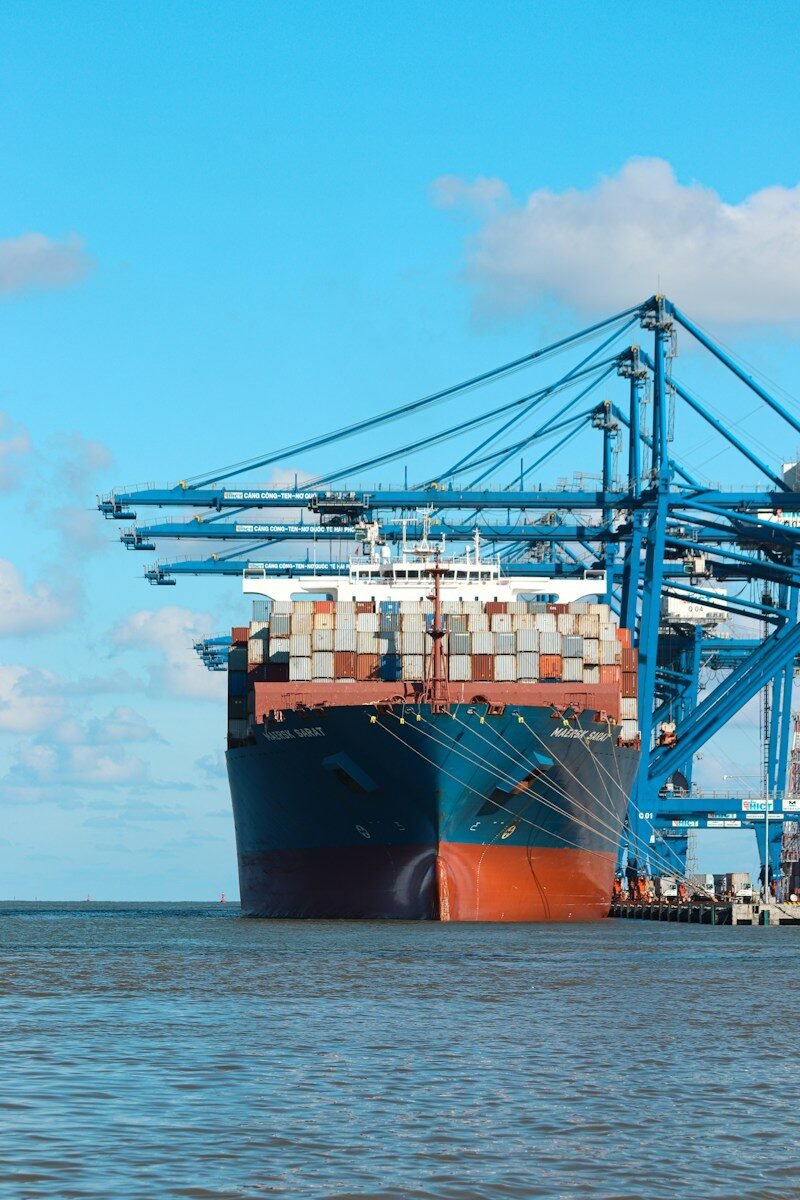
The Trump administration on Wednesday proposed new tariffs on 14 major trading partners, including China, the European Union, India and Japan, in a sweeping move aimed at what Washington calls structural excess industrial capacity flooding world markets with cheap goods.
The proposal, announced by the Office of the United States Trade Representative (USTR), follows an eight-month investigation under Section 301 of the Trade Act of 1974 into the manufacturing policies of 16 economies. It is the administration’s most significant attempt yet to rebuild the global tariff wall that the US Supreme Court struck down in February, and it comes just weeks after Republicans lost control of both chambers of Congress in the midterm elections.
China would face the highest capped rate of the group, at 20 per cent, on top of duties of roughly 25 per cent imposed during President Donald Trump’s first term. Vietnam and India, which have not finalised trade deals with Washington, would face the steepest headline rates — up to 35 per cent and 25 per cent respectively — although both could secure lower rates by reaching agreements. The duties will not take effect immediately: they are subject to a public comment period and a hearing in January, and officials said implementation could slip into the new year.
Summary
- The US Trade Representative on Wednesday 25 November proposed new tariffs on 14 trading partners after an eight-month Section 301 investigation into excess manufacturing capacity.
- China would face a capped rate of 20 per cent, on top of about 25 per cent in duties from Trump’s first term. Vietnam could face up to 35 per cent and India up to 25 per cent unless trade deals are reached.
- Mexico and Norway were not included for now, as investigations into their trade practices are still under way.
- The proposed duties are subject to public comments by 5 January 2027 and a hearing on 25 January, so they would not take effect until next year at the earliest.
- China rejected the move, calling “overcapacity” a false issue, while stock markets fell on Wednesday amid a renewed sell-off in technology shares.
What happened
The USTR announced the duties on Wednesday after completing its probe into 16 trading partners, including close allies such as Japan, the European Union and South Korea. For the time being, the office did not propose tariffs on goods from Mexico and Norway, where investigations are still under way.
A senior US official said tariffs were proposed for goods from China, Bangladesh, Cambodia, the European Union, India, Indonesia, Japan, South Korea, Malaysia, Singapore, Switzerland, Taiwan, Thailand and Vietnam. The specific rates were published in a US Federal Register notice on Wednesday.
Washington concluded that each of those trading partners “creates, sustains, or contributes to structural excess capacity and production in manufacturing sectors through various acts, policies, and practices that we find to be unreasonable and burden or restrict US commerce,” the official said.
The USTR defines structural excess capacity as situations in which countries “are promoting production and capacity divorced from the realities of demand and market principles,” including through industrial policies, subsidies and the use of components imported from non-market economies.
The proposed rates vary sharply by country, and most are capped by trade deals already agreed with Washington. Goods from the European Union, Japan, South Korea, Taiwan and Switzerland would face a 15 per cent rate. Bangladesh, Cambodia, Indonesia, Malaysia and Thailand would face 18 per cent. Singapore would be capped at 10 per cent.
China’s rate would be capped at 20 per cent, in line with a year-old trade truce with Beijing that is due to expire on 10 January. But if that truce unravels, the USTR said China’s rate would rise to 40 per cent. Vietnam would face a capped rate of 20 per cent if it reaches a trade agreement with Washington, rising to 35 per cent if negotiations fail. India would face 17 per cent if a deal is finalised and 25 per cent if talks fail.
The new duties would not stack on top of tariffs of 10 per cent or 12.5 per cent that the administration imposed in July on a wider group of 60 trading partners over allegations of lax enforcement of anti-forced-labour laws. They would also not apply to about $30 billion worth of Chinese imports that the US is considering for tariff reductions under a bilateral process known as the “Board of Trade”.
Separately, the USTR proposed a new 10 per cent tariff on imports of Brazil’s finished Embraer commercial aircraft, and higher duties on imports of Brazilian sugar above existing quotas.
Why Washington is doing this
The administration has singled out China as the biggest source of excess industrial capacity, which it says is flooding global markets with steel, aluminium, electric vehicles, appliances, solar products and other goods. China has rejected the accusations, saying its exports reflect competitive advantages.
The investigation was also partly directed at Chinese investment in countries in Southeast Asia, including Vietnam, Indonesia and Cambodia, which Washington says is used to manufacture goods for the US market and avoid earlier US tariffs.
US Trade Representative Jamieson Greer said the tariffs were intended to counteract “industrial strategies built on targeting manufacturing, wage and labour suppression, financial and other support, non-market economy inputs, and other market-distorting practices”.
Speaking to CNBC, Greer said the proposed caps were consistent with trade agreements reached over the past year that also lowered barriers to US exports. “We’re sticking to that in terms of our proposals because we think a lot of these deals we made actually solve a lot of the problems we see in excess capacity or can go toward it,” he said.
The USTR said India’s policies contributing to structural excess manufacturing capacity include industrial plans to expand manufacturing, inadequate labour protections, financial repression policies and sustained market access barriers. These are the US government’s findings under the Section 301 investigation, and they have not been independently established.
The move is widely viewed as an effort to rebuild the tariff regime the Supreme Court struck down in February. Trump has long served notice of a plan to restore those duties, and the latest action follows the eight-month probe that began in March, one of two Section 301 investigations the administration opened into manufacturing production and capacity.
What officials said
The senior US official who briefed reporters said the new duties would not exceed tariff limits in trade deals negotiated by the Trump administration, including the 20 per cent cap for China under the trade truce with Beijing.
“We know that they don’t like these actions, but we are seeking stability with the Chinese. China is seeking stability with us,” the official said, adding that Trump’s meeting with Chinese President Xi Jinping last week was “really great” and that there had been progress on supplies of Chinese rare earth minerals in recent days.
The official said Washington did not expect Beijing to retaliate against the new excess-capacity duties. Tariff rates would also be consistent with trade agreements signed by other partners, the official said, including the 15 per cent cap agreed by the EU, Japan, South Korea and Taiwan, as well as a 19 per cent cap agreed by Malaysia.
Several countries, such as India and Vietnam, do not have finalised trade deals. The US official said the new duties were expected to result in more trade agreements being negotiated and finalised, possibly at a G20 leaders’ summit in Miami in December.
US officials briefed congressional committees on the changes late on Tuesday, and affected countries were also notified, the official said.
Reaction at home and abroad
China pushed back swiftly. “The so-called ‘overcapacity’ is a false issue, and China opposes using it as an excuse for political manipulation,” Foreign Ministry spokesperson Guo Jiakun said, urging the world’s two largest economies to maintain stable relations.
The prospect of new trade barriers weighed on stock markets on Wednesday amid a renewed sell-off in technology shares. Major indices fell as investors weighed the impact of fresh duties on global supply chains already strained by two years of tariff disputes.
At home, the announcement comes at a politically sensitive moment for the administration. The Trump administration’s tariffs have in part contributed to higher prices on consumer goods in the United States, and a Reuters/Ipsos opinion poll following November’s midterm elections showed 62 per cent of respondents would support efforts to repeal the tariffs. Republicans lost both chambers of Congress in those elections, a result widely read as a rebuke of the administration’s economic policies, yet the president has pressed ahead with his protectionist agenda undeterred.
Business groups and importers are expected to use the comment period to argue against the duties, warning that higher tariffs on inputs from Asia and Europe will raise costs for American manufacturers and consumers. Supporters of the move, including domestic steel and manufacturing lobbies, have long argued that foreign subsidies and overproduction have hollowed out US industry and that tariffs are the only effective response.
The 14 targeted economies now face a choice: negotiate deals that address Washington’s findings and secure lower rates, or accept the headline duties. For Vietnam and India, the gap between the two outcomes is large — 15 and 8 percentage points respectively — giving both governments a strong incentive to strike agreements before the hearing in January.
What happens next
The proposed duties will be subject to a public notice and comment period, with a hearing scheduled before they go into effect. Members of the public can submit comments by 5 January 2027, and the USTR will hold hearings on the proposals on 25 January, which are expected to continue over several days. The official who briefed reporters said that timetable could push implementation into January.
The USTR was still reviewing excess capacity probes into Norway and Mexico, the official said, declining to provide a timeline for their completion. Any duties on those two countries would come in a separate announcement.
Attention will now turn to the negotiations. The administration has signalled that the duties are designed in part to bring trading partners to the table, with the G20 leaders’ summit in Miami in December identified as a possible venue for finalising agreements. Countries that reach deals “responsive to the determinations in this investigation” would see their rates reduced to the agreed caps.
For China, the key date is 10 January, when the year-old trade truce expires. If the truce is extended or replaced, the 20 per cent cap would hold. If it lapses without agreement, the rate could rise to 40 per cent, sharply escalating the trade confrontation between the world’s two largest economies.
More from The Global Brief: read our earlier World News report on the Cartagena hostage siege, which ended with all hostages rescued alive — https://theglobalbrief.site/cartagena-hostage-siege-ends-all-hostages-rescued-alive/
Sources
- Reuters — US proposes new tariffs on 14 trading partners to fight excess factory capacity: https://www.reuters.com/world/china/us-proposes-new-tariffs-14-trading-partners-fight-excess-factory-capacity-2026-11-25/
- Channel News Asia — Trump announces new tariffs on 14 trading partners including China and Singapore: https://www.channelnewsasia.com/world/trump-new-tariffs-us-midterms-6581566
- The Financial Express — US proposes tariffs of up to 25% for India; Bangladesh and EU to face up to 20%: https://www.financialexpress.com/world-news/us-proposes-tariffs-up-to-25-for-india-bangladesh-and-eu-to-face-up-to-20/4393679/
1 thought on “US Proposes New Tariffs on 14 Trading Partners in Fresh Push Against Excess Factory Capacity”
Comments are closed.